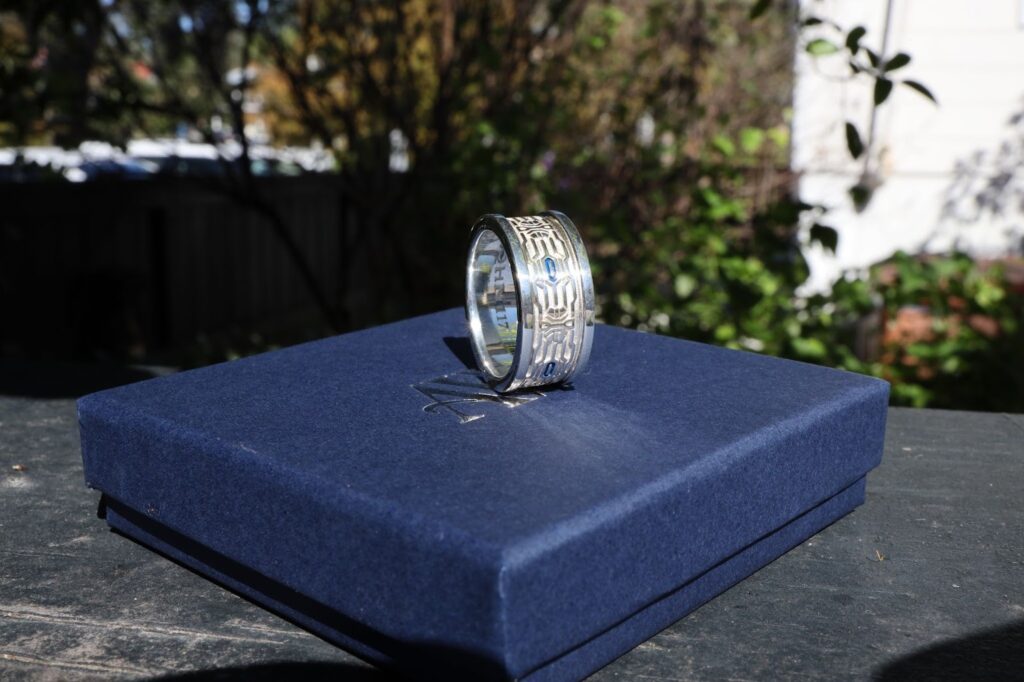
Engraving feels like a whisper you get to keep. A date no one else needs to read. Initials that rest against the skin like a steady thought. But when a ring is worn every day, washed, stacked, turned, lived in, there’s one quiet detail that decides whether that whisper stays legible: engraving depth.
At AW Jewelry, engraving is never an afterthought. It’s part of the promise. Heirloom soul, engineered precision. A mark meant to endure, not just on the day it’s given, but on ordinary Tuesdays years from now. The goal isn’t to carve too deeply. It’s cut with intention, so the message remains refined and readable through real life.
What Is the Best Engraving Depth for Daily Wear Rings?
For rings worn every day, engraving needs enough depth to survive friction without compromising comfort. Too shallow, and the message softens quickly. Too deep, and the band can feel sharp or visually heavy.
The sweet spot for engraving depth is an engraving that is truly cut, not merely marked. You should be able to feel that engraving depth lightly with a fingernail, without it catching. Inside-band engravings tend to hold their engraving depth longer because they’re protected from direct impact, while exterior engravings require more thoughtful planning to preserve clarity.
Ring width, metal type, and placement all influence the right engraving depth. A narrow band can’t support the same engraving depth as a wider one. And an engraving placed where the ring rubs constantly against other bands needs a different approach than one that lives quietly on the interior.
Longevity isn’t about going deeper, it’s about choosing the right engraving depth and cutting smart.
Is Deeper Always Better for Long-Lasting Engraving?
Not always. More engraving depth can improve durability, but it can also create unintended consequences. Overly deep cuts may weaken thin bands, disrupt smooth edges, or make future refinishing more difficult, especially when the band doesn’t have enough metal to support that engraving depth gracefully.
There’s also the reality of routine care. Rings are polished over time, and that’s normal. Each polish removes a tiny layer of metal. If the engraving depth is too shallow, it fades quickly. If the engraving depth is too deep, it can distort the surface around it or collect debris, making the engraving look uneven rather than elegant.
The best engravings balance engraving depth with line quality. Clean spacing, intentional letterforms, and thoughtful placement often matter more than depth alone. A refined cut with the right engraving depth lasts longer than a rushed one, no matter how deep it goes.
How Do I Know If My Engraving Is Too Shallow?
Shallow engraving often looks crisp at first, then fades quietly. You may notice the letters losing their edges, the contrast softening, or the message becoming harder to read unless you tilt the ring just right.
This doesn’t mean the engraving was wrong, it simply means it was designed for light wear or for minimal structural impact. On very thin bands, a lighter engraving can be the responsible choice.
If longevity matters most to you, ask for an engraving that’s cut, not just darkened or surface-marked. A subtle tactile feel is usually a good sign that the message will stay with you longer.
What Engraving Depth Should I Ask for If I Want It to Last?
Rather than asking for “deep,” ask for the right depth for your ring and message. A good jeweler will translate that request into a cut that respects the band’s structure while protecting legibility.
Helpful questions to ask:
- Will this engraving be a true cut or a surface mark?
- Is this depth appropriate for the band’s thickness?
- How will future polishing affect it?
- Is this placement protected enough for daily wear?
The best engravings are designed with the ring’s long life in mind, not just its first impression.
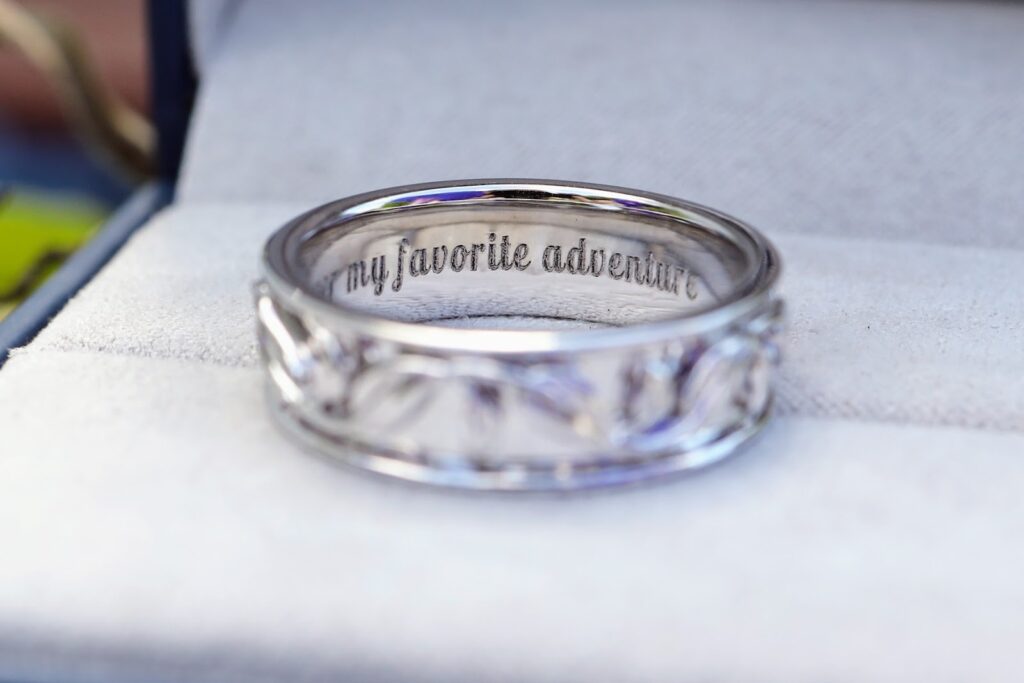
Does Engraving Placement Change How Deep It Should be?
Absolutely yes, placement is everything. Inside-band engravings live a sheltered life. They experience friction, but far fewer impacts. Because of that, they can often be slightly finer and still last beautifully.
Exterior engravings are exposed to daily knocks, keys, countertops, weights, winter gloves. They require more intention in spacing and structure, not just depth. If the engraving sits where rings stack or rub, that matters too.
If privacy and preservation are priorities, interior engraving is often the most enduring choice. Exterior engraving can still be stunning, it just needs to be designed with lifestyle in mind.
How Do Metal Type and Finish Affect Engraving Longevity?
Metal choice matters. Some alloys show wear faster than others. Finishes matter too.
High-polish surfaces highlight scratches, which can visually compete with engraving over time. Matte or brushed finishes tend to keep engravings legible longer because they reduce glare and camouflage everyday wear.
Craftsmanship matters just as much as material. A cleanly cut line with thoughtful spacing will age better than a deeper cut with rushed execution. The engraving method, hand-cut, machine-assisted, or laser, also affects how the lines wear and soften.
Longevity lives at the intersection of material, method, and intention.
How Do I Choose Between Hand Engraving and Laser Engraving for Daily Wear?
The differences that matter most show up here, start with how each method feels, then how it wears.
What Hand Engraving Feels Like:
Hand engraving creates a cut with natural character, tiny variations that give it an heirloom warmth. It often has a slightly deeper, more dimensional groove, which can hold up beautifully over time, especially for meaningful interior messages or classic monograms.
What Laser Engraving Does Best:
Laser engraving shines when you want precision: crisp fonts, tiny lettering, symbols, coordinates, even intricate line art. It’s incredibly consistent and clean, but depending on how it’s done, it may be more of a surface mark than a deeper cut, so placement matters more for longevity.
How to Decide Without Overthinking:
If you want your engraving to feel old-world and soulful, choose a hand. If you want exactness and fine detail, choose a laser. And if you want both? Many clients do: hand engraving for the “heart” message, laser for the fine technical details.
Is Laser Engraving Durable Enough for Everyday Rings?
It can be, when planned properly.
Laser engraving offers exceptional precision, especially for small text, symbols, or detailed designs. But not all laser engraving is the same. Some methods create a surface mark rather than a true cut, which can fade more quickly on high-wear areas.
If you choose laser engraving, ask whether the process creates depth or primarily contrast. Placement becomes especially important here, inside-band laser engravings often last beautifully, while exterior ones require more care.
Laser engraving isn’t temporary by default. It’s precise by nature. Longevity depends on how it’s executed.
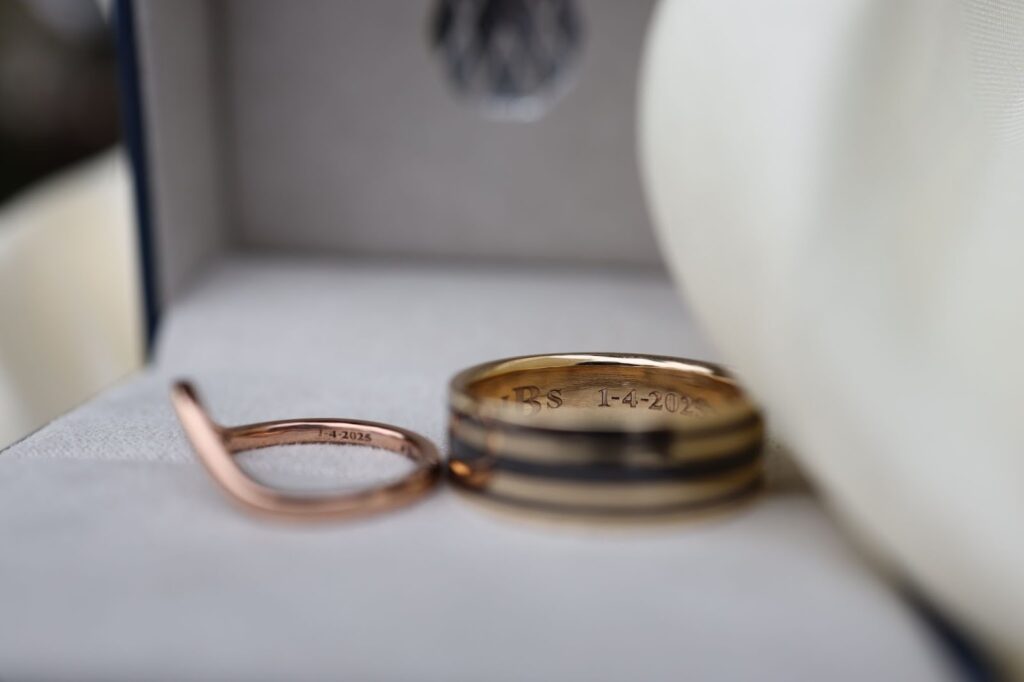
What Fonts and Details Hold Up Best at Fine Engraving Depths?
Simplicity endures. Clean fonts with open spacing remain readable longer than ultra-thin scripts. If you love cursive styles, choosing slightly larger lettering helps preserve clarity as edges soften over time.
Symbols and icons should have clear outlines. Short phrases age better than long ones. And allowing space, between letters and around the engraving, keeps the message from feeling crowded or fragile.
The most lasting engravings feel like they belong to the ring, not like they were squeezed into it. Let the message breathe. Fine engraving should feel intimate, not delicate. With the right engraving depth, placement, and craftsmanship, your words can remain clear through years of daily wear, steady as the Promise they represent.
If you’re planning an engraving and want it to endure with quiet confidence, AW Jewelry is here to guide every detail. Schedule your consultation from distance or at the atelier and let’s carve something lasting, with clarity you’ll love for years to come.