A curved contour wedding band isn’t just a style choice, it’s a protection plan you can wear. If you’ve ever noticed a tiny gap between your engagement ring and a straight wedding band, or felt the two pieces “click” together when you move your hand, you’ve already met the reason these bands exist.
In plain terms: when two rings don’t sit well together, they rub. And rubbing day after day can thin metal, soften pavé edges, and nudge prongs in ways you don’t notice until you’re suddenly nervous about your center stone. A contour band follows the shape of your engagement ring, so the stack behaves like it belongs together.
At AW Jewelry, we think of this as engineered precision wrapped around heirloom soul: protect the details, so you can wear the promise with calm confidence.
What Is a Contour Wedding Band?
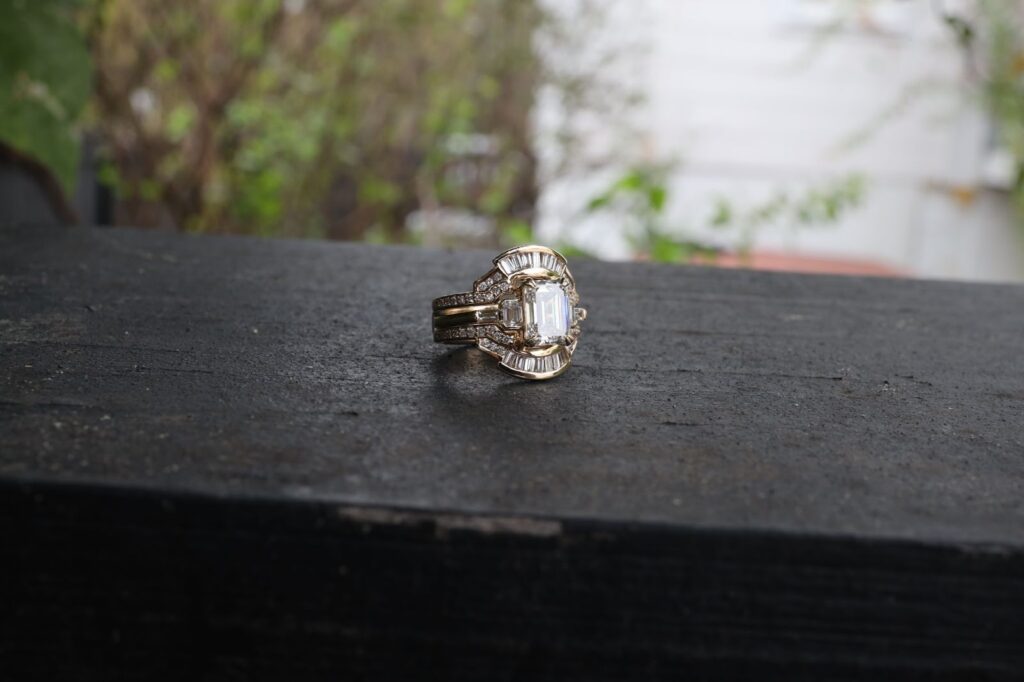
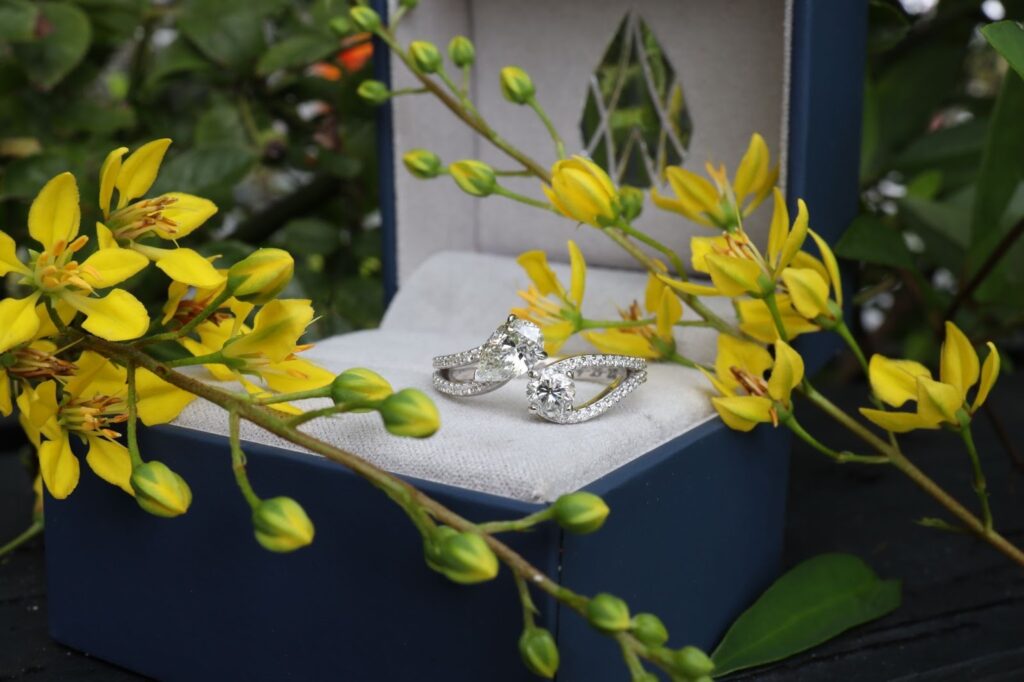
A contour wedding band is a band shaped to follow the silhouette of your engagement ring instead of fighting it. Some have a gentle arc. Others have a defined dip, a V-shape (often called a chevron), or a notch designed to nest around a center setting. You may also hear “shadow band” or “fitted band” in the same family, with slightly different intent.
The goal is simple: make the two rings sit closer together, more comfortably, with less friction and fewer pressure points. When the stack fits, it feels smoother on your hand and looks more intentional from every angle. And for delicate rings; thin shanks, pavé, vintage filigree, and petite prongs, fit isn’t just cosmetic. A curved contour wedding band helps protect what’s delicate.
If you’re wondering, “Do I need one?” The quick answer is: if your straight band leaves a gap, pushes your ring sideways, or rubs a setting, a curved contour wedding band is worth considering.
Why Does Curved Contour Wedding Band Protect Delicate Ring Details?
They protect details because they change how the rings touch and how they move.
Less Friction, Less Wear:
When two rings grind together every day, metal slowly thins and edges soften. A contour band reduces the rubbing that causes that “mystery wear” over time.
Better Contact, Fewer Pressure Points:
A straight band can press against prongs, a basket, or a halo in one small spot. A curved band spreads contact more evenly, which is gentler on delicate structures.
More Stable Stacking:
If a straight band pushes your engagement ring off-center, you get more spinning and more knock-on impacts. A fitted contour helps the stack sit steadier, so prongs and pavé take fewer hits.
Cleaner Protection for Fine Details:
Milgrain, engraving, and pavé are tiny by design. The right contour band helps those details stay crisp instead of getting polished down by constant contact.
In short: better fit equals fewer surprises.
Which Engagement Ring Styles Benefit Most from a Curved Contour Wedding Band?
Curved contour wedding band shines when the engagement ring has height, shape, or delicate side detail that a straight band would bump. Solitaires with higher settings often benefit because the basket or head can block a straight band from sitting flush. Halos and hidden halos also love contour bands, since the band can protect the edges that tend to catch and rub.
Elongated centers oval, pear, marquise are especially good candidates because their profiles can create awkward gaps with a straight band. Rings with pavé shoulders or thin micro-prongs also benefit because a contour band reduces the daily “metal-on-metal” scuffing that slowly loosens or thins tiny components.
Vintage-inspired rings think milgrain, filigree, or engraving often do better with a contour too, simply because those details deserve a gentler neighbor.
If your current stack feels like it’s always shifting, clicking, or leaving a visible space you don’t love, that’s usually your ring asking for a better-fitting partner.
How Can a Straight Band Damage Prongs or Pavé Over Time?
Most damage isn’t dramatic; it’s quiet, slow, and cumulative. A straight band that doesn’t fit your engagement ring often creates one of two problems: a persistent gap or constant pressure. Both can lead to wear, which is exactly where a Contour Wedding Band helps.
When there’s a gap, the rings tend to rock and slide. That movement causes repeated micro-contact, tiny taps and rubs, that can slowly thin the metal where the rings touch. Over months and years, that wear can soften crisp edges, flatten milgrain, and reduce the “bite” that helps pavé beads hold stones securely. A Contour Wedding Band nests closer, reducing that daily shifting.
When there’s pressure, it’s even more direct. A straight band may push against the base of a setting or the underside of a halo, nudging prongs or stressing solder points. You might not notice until a prong catches on a sweater, or a small stone starts to feel less secure. A properly fitted Contour Wedding Band avoids pressure on delicate areas while still stacking neatly.
A Contour Wedding Band isn’t about fear. It’s about preventing wear before it becomes a repair.
What Are the Signs You Need a Curved Contour Wedding Band?
If you’re deciding by feel, these are the clearest clues:
- Your wedding band won’t sit flush with your engagement ring
- The rings “click” together when you move your hand
- Your engagement ring spins or shifts more when stacked
- You see a visible gap that bothers you daily
- Your straight band presses into prongs, a halo, or a basket
- Pavé edges look more worn on the side facing the band
- The stack feels bulky or uncomfortable between fingers
- You avoid wearing both rings together because it feels “off”
If any of these sound familiar, a curved contour wedding band is a calm, practical upgrade. The right fit protects delicate details and makes the stack feel like it was always meant to be one story.
Should the Band Match the Ring Exactly or Leave a Small Gap?
This is one of the most common voice-search questions, and the answer depends on what you’re protecting. A perfectly flush fit can look seamless, but it isn’t always the gentlest option especially for very delicate pavé or ornate side details. In some cases, a tiny intentional gap is healthier, because it prevents two detailed surfaces from constantly rubbing.
That said, most people don’t want a visible “floating” space. The sweet spot is usually a contour band that nests closely while avoiding pressure on prongs, halos, and bead-set stones. Think of it like good shoes: snug where it should be, but never pinching.
A jeweler should check your ring under magnification and explain where contact will happen. If the band is pushing on structure, that’s a no. If it’s supporting the stack without stress, that’s a yes.
The best match is the one that protects the details you can’t replace.
Can You Wear Curved Contour Wedding Band Without Soldering Them Together?
Absolutely. Many people wear a curved contour wedding band and engagement ring as separate pieces, and it works beautifully especially if you like flexibility. Wearing them separately allows you to switch bands, stack multiples, or wear only one ring on certain days.
Soldering (joining the rings) can make sense if your rings constantly spin, if you want one unified piece for comfort, or if your lifestyle is hard on your hands and you want maximum stability. But it’s not mandatory, and it’s not always ideal particularly if you may resize in the future or want to preserve the option of wearing the engagement ring alone.
A calm approach is to start unsoldered, see how the stack behaves, and then decide. The right contour fit often reduces movement enough that soldering becomes a preference, not a necessity.
If you’re unsure, choose the path that keeps options open while still protecting the delicate work.
How Do You Choose the Right Curved Contour Wedding Band for Daily Wear?
Start with how you live, not just how it looks. If you’re active, hands-on, or you wear your rings every day, prioritize comfort and durability: a band that sits smoothly, doesn’t pinch, and doesn’t create pressure points against the setting.
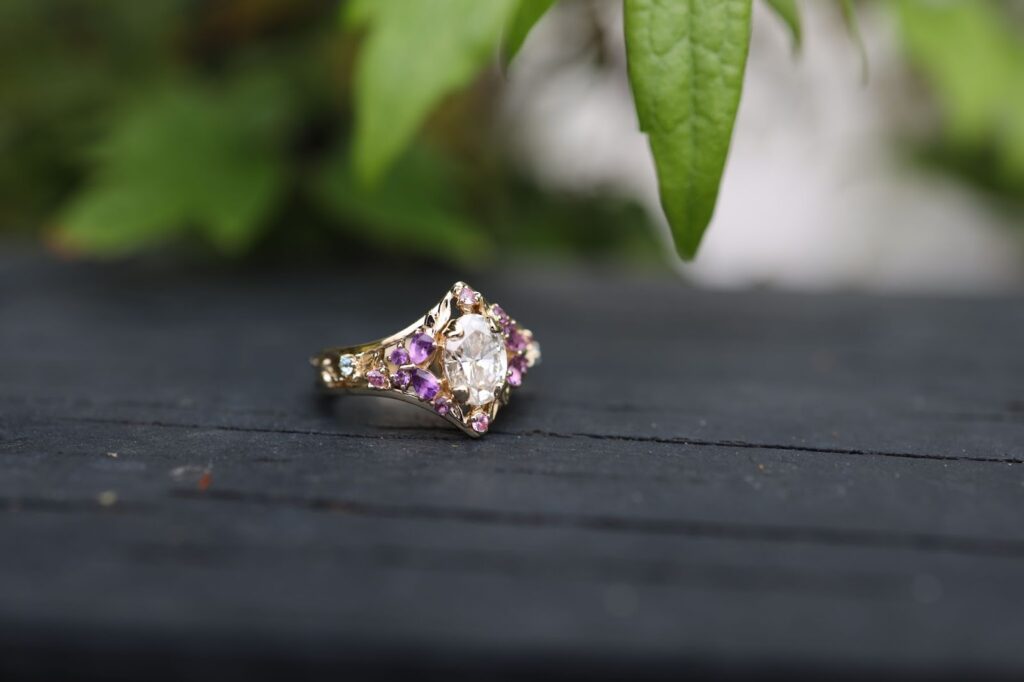
Next, match the contour to the ring’s architecture. A gentle curve may suit a low profile. A deeper notch may be needed for a high-set center. For chevrons and V-shapes, decide whether you want the point facing up (more modern) or down (more classic). Then choose details that complement rather than compete with your engagement ring. Thin pavé bands can be beautiful, but a plain polished contour can sometimes be the most protective partner.
Finally, get the fit checked in person. The right band should nest neatly and feel steady, not forced.
If you want help choosing, we’ll look at your ring and explain what it needs plainly and kindly.
Curved and contour wedding bands don’t just make a stack look finished they help it wear finished. They protect prongs, preserve pavé, and keep fine details crisp by reducing the daily friction most people never notice until something feels loose.
If you’d like a steady second opinion, you’re welcome to visit our studio for a quiet fitting and stack check no rush, no pressure. Prefer to start from home? Set up a virtual consultation and we’ll review photos, talk options, and map the best contour for your ring’s shape and your life. Either way, we’ll help you keep the details safe and the story close.