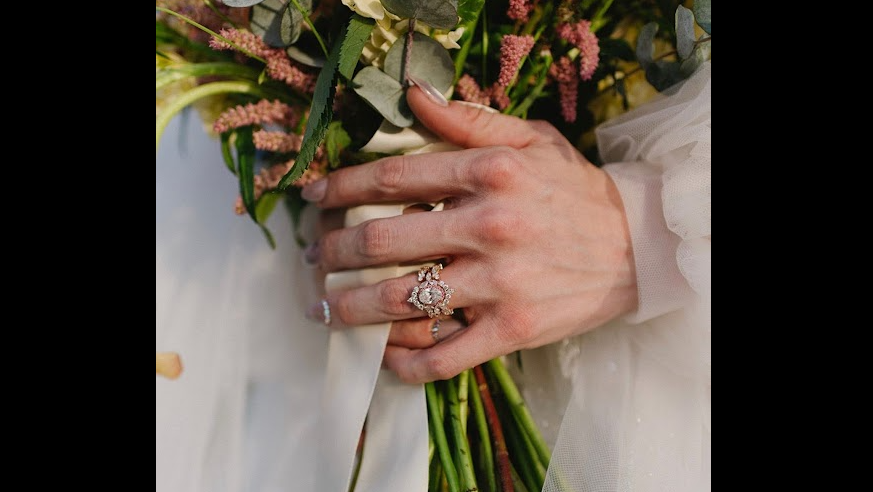
If your engagement ring has fine prongs, a hidden halo, or pavé that catches the light like a whisper, there’s a good chance your wedding band is about to become its closest neighbor and its biggest risk. Most people shop for bands by sparkle and shape. But the real question is simpler: will curved wedding bands live well beside your ring? Because when two rings don’t fit together, they rub, knock, and press in places you never intended, and delicate details are always the first to pay the price.
At AW Jewelry, we treat every ring as a promise, made for devotion, engineered with precision, and meant to be worn without worry. A curved wedding band isn’t just a style choice. It’s a quiet form of protection. It’s how you keep your center stone setting, prongs, and fine detailing looking like themselves, year after year.
What Is a Curved Wedding Band?
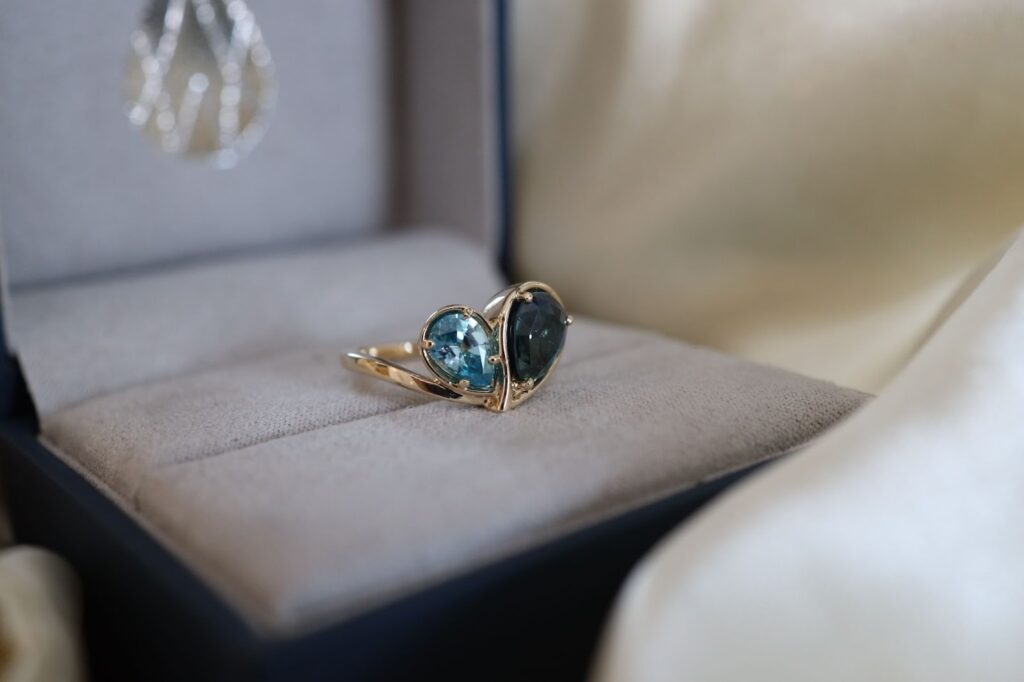
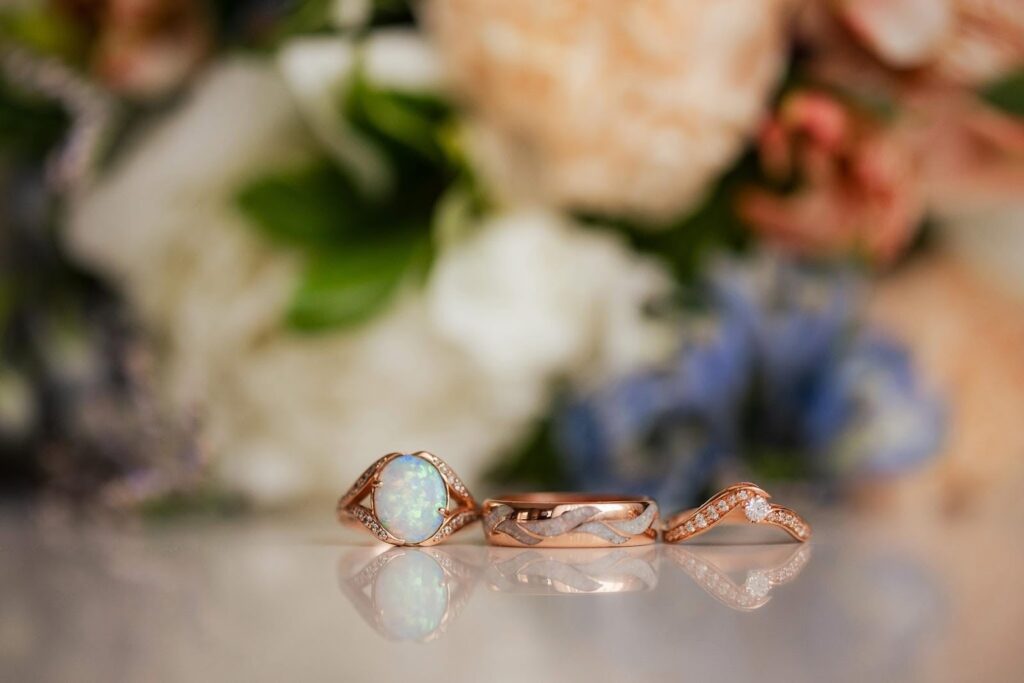
A curved wedding band is designed with a gentle arc (or contour) so it nestles against your engagement ring instead of pushing into it. Think of it like a custom handshake, no awkward gaps, no pressure points, no constant spinning to “make it look right.” It’s still a wedding band at heart, just shaped to honor what it’s sitting beside.
This matters most for rings with raised settings, halos, baskets, or delicate side stones. A straight band can press into those features, creating friction that wears down edges over time. A curved wedding band reduces contact where contact shouldn’t exist, so your details stay crisp instead of slowly softening.
And aesthetically? It gives you that satisfying, seamless look, like the set was always meant to be together. Not forced. Not fussed with. Just naturally aligned, the way a promise should feel.
How Does a Curved Wedding Band Protect Prongs and Pavé?
A curved band protects delicate details because it’s shaped to avoid them. Instead of knocking into prongs or scraping pavé beads, it hugs the negative space around your engagement ring. That means fewer micro-impacts, less rubbing, and less pressure on the parts that hold your stones secure. Here’s how it helps, in plain terms:
Less Friction, Less Wear:
When bands grind together daily, tiny metal loss adds up. A contour reduces those grind points. It’s the difference between rings constantly “meeting” and rings simply resting side by side. Over months and years, that calmer contact helps preserve crisp edges, beadwork, and fine finishing. And your set keeps its clean, intentional look, without the quiet wear-and-tear you never meant to invite.
Better Clearance for Settings:
Raised baskets, halos, and hidden accents need breathing room. Curvature creates it. Instead of pressing into delicate structure, the band follows the ring’s silhouette with ease. That little pocket of space helps keep prongs steadier and fine details from getting nudged out of alignment. So the beauty you chose stays protected, quietly, every day, without you having to think about it.
Stability in the Stack:
A good fit means the rings move less, twist less, and collide less, especially during normal hand motions. That steadiness protects the delicate spots that shouldn’t be taking daily impact. It also keeps your set looking aligned, instead of constantly needing a little “straightening.” And honestly? It just feels better, like the rings were made to live together.
At AW Jewelry, we see it as engineered care: the kind that protects what you love without asking you to be precious about it. Your ring should shine through real life, not only in perfect lighting.
Will a Straight Band Damage My Engagement Ring Over Time?
Not always, but it can, especially if your engagement ring has fine details or a raised setting. The issue isn’t “straight bands are bad.” The issue is straight bands don’t account for your ring’s architecture. When there’s a gap, the band often slides into it. When there’s contact, it’s often in the wrong place: prongs, gallery rails, pavé edges, or delicate side stones.
Over time, repeated contact can lead to thinning metal, softened prong tips, or worn pavé beads (the little metal “grips” holding tiny stones). It’s not dramatic in one day. It’s a slow story, one most people only notice when a stone starts looking less secure or the details lose their crispness.
A curved wedding band reduces that daily collision. It’s less about fear and more about foresight. The goal is to wear your set confidently, not carefully.
What Ring Styles Benefit Most From a Curved Wedding Band?
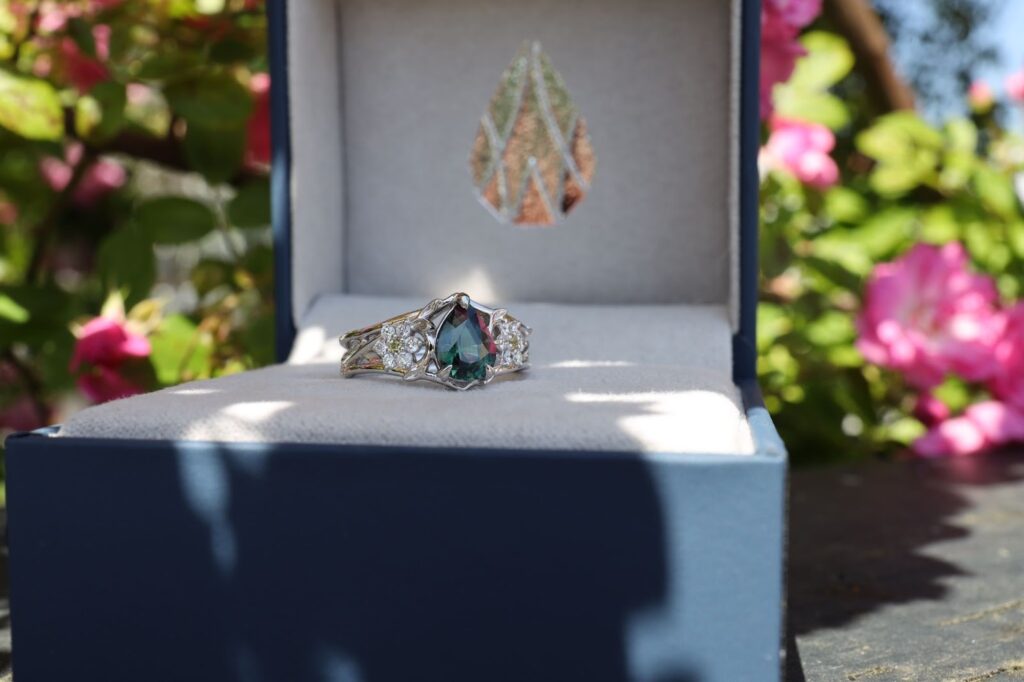
If your ring has dimension, meaning it sits up, out, or includes intricate details, a curved band is often the kinder match. It’s especially helpful when your engagement ring isn’t flat along the sides, or when details live close to where a band naturally rests.
Here are the styles that usually benefit most:
- Halo or hidden halo settings
- Pavé or micro-pavé bands
- Cathedral settings and raised baskets
- Three-stone rings with prominent side stones
- Vintage-inspired rings with filigree or milgrain
- Rings with unique shapes (pear, oval, marquise) that create natural gaps
- East-west settings that shift how a band sits
- Wider engagement bands that make straight bands feel misaligned
If you read that list and thought, “That’s basically my ring,” you’re not alone. A curved wedding band isn’t extra, it’s often the most practical way to protect fine craftsmanship while keeping your set beautifully unified.
Do Curved Wedding Bands Leave a Gap, or Do They Sit Flush?
A well-designed curved wedding band should sit flush, or close enough that it feels intentional, not accidental. The goal is to avoid the “floating band” look where there’s a big space between your rings. That space isn’t just visual; it can cause your rings to rotate and knock into each other more.
That said, “flush” depends on your ring’s setting height and shape. Some rings are built with dramatic profiles (think tall center stones or intricate galleries). In those cases, a slight gap might be necessary for safety, because forcing a perfectly flush fit can create pressure on prongs or hidden details, which defeats the purpose.
The best outcome is a fit that looks seamless and protects the ring. At AW Jewelry, we guide for both refined alignment on the hand, and engineered clearance where your details need room to breathe.
Can I Wear a Curved Wedding Band If My Engagement Ring Is Already Delicate?
Yes, and honestly, that’s often when it matters most. Delicate rings are beautiful because they’re detailed. But detail means fine metalwork, small settings, and precise stone placement. That’s exactly the kind of craftsmanship that benefits from a band designed to cooperate, not compete.
A curved wedding band helps by reducing daily stress on those fine areas. Instead of pressing into pavé or bumping prongs, it follows the shape of your ring like it belongs there. And when your rings fit together properly, they’re less likely to spin, slide, or grind, little motions that quietly add wear over time.
If you love the delicate look but want more peace of mind, you can also choose a curved wedding band with a slightly sturdier build while still keeping the overall profile refined. Think about soft presence, strong purpose, timeless, not fragile.
How Do I Choose the Right Curve or Contour for My Ring?
Choosing the right contour is less about rules and more about fit. Your engagement ring has its own silhouette, where it rises, where it dips, where details sit close to the finger. The right curve mirrors that.
Start by noticing where a straight band touches your engagement ring. If it hits the setting, pushes the ring off-center, or leaves a gap that annoys you every time you look down, you’re already getting your answer.
A few practical cues help:
- If your ring has a prominent center setting, look for a deeper contour.
- If the profile is low but detailed, a gentle curve often works best.
- If you want a seamless set, prioritize fit first, sparkle second (then bring sparkle back in, beautifully).
At AW Jewelry, we approach this with clarity: we match shape to structure so your set feels like one Promise, not two pieces negotiating for space.
Can a Curved Wedding Band Be Resized or Adjusted Later?
Yes, in many cases, but it depends on the design. A plain curved wedding band is typically more flexible for resizing than one with intricate pavé or a highly specific contour. Stones, settings, and patterned details can limit how much metal can be safely adjusted without changing the shape or compromising security.
If your curved band includes pavé, resizing may require additional craftsmanship to maintain stone integrity and the curve’s symmetry. The curve itself is a precision element, altering it needs a careful hand, not quick handling.
This is exactly why we frame it as Client Services, not “fixes.” When a Promise needs care, it deserves refined attention. If you anticipate changes (temperature swelling, lifestyle shifts, future stacking), choose a design that balances beauty with flexibility.
The good news is when you start with the right structure, future adjustments become far simpler, and the piece continues to wear like it was made for you.
A wedding set should feel like a quiet yes, comfortable, aligned, and built to last. A curved wedding band protects the delicate details you fell in love with: prongs that hold steady, pavé that stays crisp, craftsmanship that doesn’t get worn down by daily friction. It’s not about being cautious. It’s about being intentional.
If you’re choosing your band now, or realizing your current stack isn’t treating your ring kindly, AW Jewelry is here to help you find the contour that fits with clarity. Schedule your permanent piece consultation by video or at the atelier, and let’s shape a set that wears like a promise.