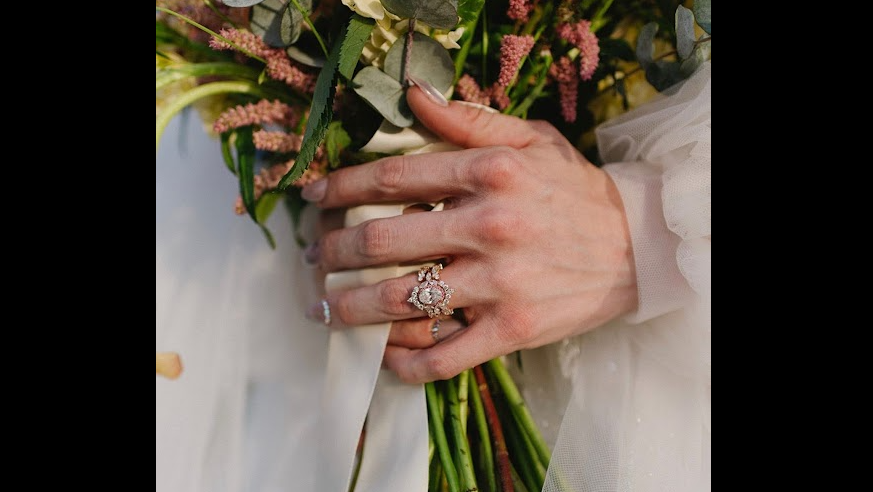
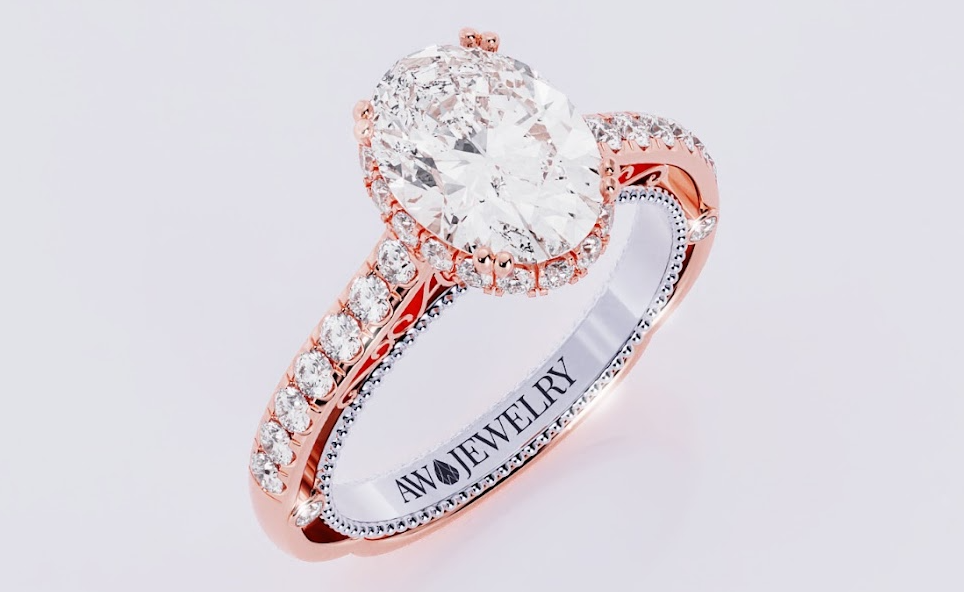
You notice it as the light shifts, and something flickers across the stone. An oval diamond turns gently, and a dark ribbon glides through its heart. The sparkle softens, the romance remains, but the glow feels paused mid-breath.
AW Jewelry blends heirloom soul with engineered precision to help you read light, not just labels. Our diamond specialists evaluate faceting, proportion, and performance in real lighting so your oval and any diamond shapes you consider stays bright from every angle.
What is the Bow-Tie Effect in Oval Diamonds?
The bow-tie is a darkened “X” or ribbon across the center of some oval diamonds. It’s not dirt or a grading issue; it’s physics. When light entering the stone doesn’t return to your eye usually because of how facets align the middle looks shadowy. All elongated diamond shapes (oval, marquise, pear) can show some bow-tie. A whisper of it can add dimension and drama; a heavy bow-tie can look like dullness.
The goal isn’t necessarily “zero bow-tie,” but “balanced contrast” where the diamond still throws lively scintillation through the center. That’s why we judge ovals in motion, not just face-up in a tray; bow-ties appear and disappear as you move, and the right cut keeps the sparkle alive.
Why Do Some Ovals Show a Strong Bow-Tie While Others Don’t?
It comes down to how the pavilion and crown facets meet, plus the stone’s overall proportions. If key facets are misaligned or the pavilion is too shallow or too deep, light leaks instead of reflecting back. Table size, depth, and even minor symmetry play a role. Because labs don’t assign an overall “cut grade” for ovals the way they do for rounds, two stones with identical certificates can perform very differently in real life.
That’s why we look beyond the report and study actual light behavior. In plain language: the geometry underneath the sparkle matters. You want intentional, harmonious facet architecture, not just numbers that look good on paper.
What Numbers and Ratios Should I Watch to Reduce Bow-Tie Risk?
Numbers won’t guarantee perfection, but they’re a solid filter before we study the stone in hand. For balanced ovals that often show minimal bow-tie, we tend to favor:
Ideal Table (54%–60%):
This proportion balances fire and brilliance, allowing light to dance evenly across the diamond’s face. A smaller table increases sparkle but risks deep shadows, while a larger one can flatten the look. Staying within this range keeps your oval diamond lively and well-proportioned.
Balanced Depth (60%–66%):
Too shallow, and the center may leak light; too deep, and the tips darken. Proper depth creates harmony between brightness and elongation, ensuring your diamond glows rather than dims.
Classic Ratio (1.30–1.45):
Ratios above 1.45 elongate the diamond elegantly but require careful light evaluation to prevent an exaggerated bow-tie. Around 1.35–1.40 usually provides the most balanced, flattering look on the hand.
High Symmetry and Polish:
Even with ideal proportions, poor facet alignment can dull light return. High symmetry ensures that light enters, reflects, and exits cleanly keeping your oval brilliant from every angle.
These ranges aren’t hard rules; exceptional performers exist outside them. Still, they help you avoid the extremes most prone to light leakage. We also review facet patterning (eight-main vs. mixed, crushed-ice styles) because certain arrangements distribute contrast more evenly, reducing a heavy bow-tie and preserving that bright oval glow you’re after.
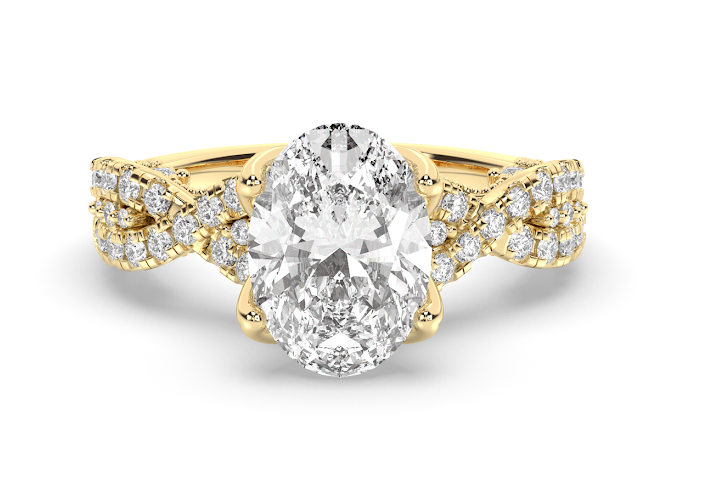
How Should I Evaluate an Oval in Person (Or Over Video) so I Don’t Miss The Bow-Tie?
Look at the diamond in motion and in different lighting. A single bright spotlight can hide issues; soft, ambient light tells the truth.
When evaluating an oval diamond, view it at arm’s length and up close, tilting it gently in different directions. Check it in daylight by a window and in soft indoor light, never just under bright jewelry lights. Watch whether the center stays bright or turns shadowed, then compare a few side by side. Your eye will naturally find the one that feels most alive.
A small, crisp ribbon of contrast is fine; a wide, flat shadow that refuses to break into sparkle is not. If you’re buying remotely, request neutral-light videos and stills from multiple angles exactly what we provide at AW Jewelry.
Do Certain Diamond Shapes Show Less Bow-Tie Than Ovals?
All elongated diamond shapes can show some bow-tie because of how they stretch light paths. That said, the character of contrast varies. Pears and marquises often show stronger central ribbons; elongated cushions and radiants distribute contrast more like a mosaic, so any “bow-tie” reads as scattered sparkles rather than a single band. If you love elongation but want the lowest bow-tie risk, consider:
- The elongated cushion brilliantly offers plush fire and a soft, pillowy outline. Its facets create gentle contrast, giving a warm, vintage-inspired glow with graceful elongation.
- The elongated radiant delivers crisp, edge-to-edge sparkle. Its angular facets break up the center, reducing bow-tie shadowing while adding bold brilliance.
- The oval with a mixed or “eight-main” facet pattern softens the central band. It keeps the classic oval shape but spreads light evenly for a smoother, more balanced shine.
We’ll line up best-in-class options so you can see how each shape handles light with your taste guiding the final choice.
Can Setting Style Help Minimize the Look of a Bow-Tie?
A thoughtful setting can’t fix a fundamentally leaky cut, but it can frame and brighten what you’ve got. Consider ways the mounting channels light and focuses the eye:
- Slim prongs at N–S–E–W keep the outline open and airy. They draw attention to the diamond’s shape and sparkle rather than any shadow or metal.
- Open galleries allow light to enter from every side. This small detail brightens the stone and enhances its natural radiance.
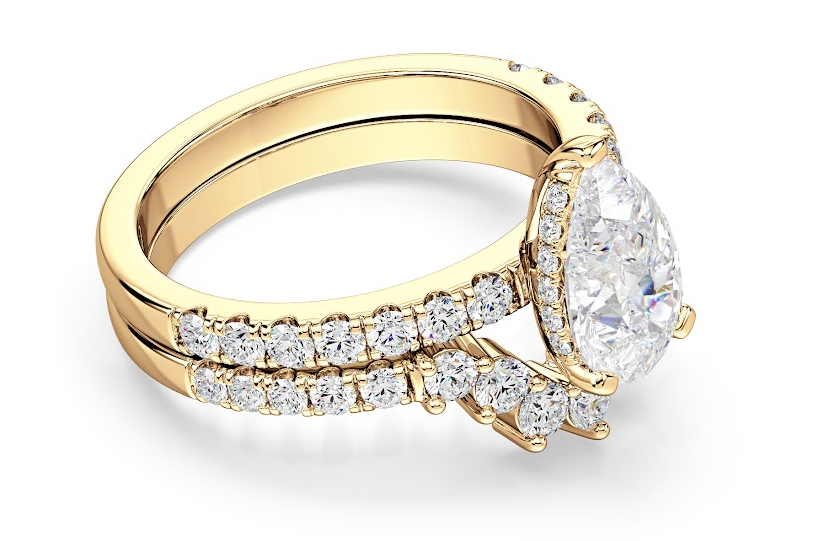
- Hidden halos add a soft ring of peripheral sparkle. They subtly fill the center and make the diamond appear larger without stealing focus.
- Bezel or semi-bezel settings can look sleek and modern. Just keeping metal minimal too much coverage can darken deeper ovals.
Think of the setting as stage lighting: it enhances a strong performer and gives decent stones a helpful spotlight. We’ll prototype options to show the effect before you decide.
Should I Prioritize Carat, Color, or Clarity When I’m Worried About Bow-Tie?
Cut behavior (light return) will impact beauty far more than small bumps in color or clarity. With ovals, we often guide clients to “buy the performer first,” then fine-tune the rest:
- Cut and performance come first, always. Choose the liveliest stone even if it’s slightly smaller because brilliance matters more than carat on the hand.
- Color should suit both the setting and your eye. Ovals reveal color more than rounds, so G–H–I tones shine beautifully in yellow or rose gold, while F–H looks crisp in white metals.
- Clarity can offer great value when chosen wisely. VS2–SI1 stones that are eye-clean perform wonderfully just to avoid inclusions near the bow-tie where light is most visible.
If your budget is fixed, reducing carat slightly to secure an excellent performer is a decision you’ll appreciate every time you see the ring sparkle in normal, everyday light.
Are Elongation and Length-To-Width Ratios Linked to Bow-Tie Strength?
They’re linked to how the bow-tie shows up. More elongated ovals (say 1.45–1.55+) can look elegant on the hand but may concentrate contrast in the midline if other proportions aren’t dialed in. Classic ratios (1.30–1.40) often distribute brightness more evenly across the face.
Your finger shape matters too: elongated ovals are flattering on most hands, but the wrong ratio for your setting height can emphasize a central ribbon. We’ll fit samples to your hand and setting style, then use ratio as a tool not a rule to reach your preferred look. When the outline, facet plan, and ratio harmonize, you get that sought-after “glow without the stripe.”
How Does AW Jewelry Help Me Choose an Oval that Stays Bright?
We start by pre-curating only high-performing ovals stones that pass our in-house light tests before you ever see them. Then we walk you through side-by-side comparisons in natural and neutral lighting, slow-motion videos, and hand shots at true-to-life distances. We explain the facet architecture in human terms, so you know why a stone looks lively. Finally, we pair your oval with a setting that feeds it light and flatters your style.
If an alternate diamond shapes option (elongated cushion, radiant, pear) better fits your eye, we’ll show you no pressure, just clarity. That’s our promise: heirloom soul, engineered precision, made personal.
A little contrast gives an oval personality; too much steals its light. Choose the performer first, then fine-tune color, clarity, and carat around the stone that speaks to you. With the right cut and setting, an oval won’t carry a shadow, it will carry your story.
If you’re ready to compare oval performers (and smart alternatives across diamond shapes), schedule your AW Jewelry Diamond Consultation at the studio or from afar. We’ll find the stone that glows for you, no stripe, just promise.