Inherited jewelry has a way of changing the air in a room. You open a small box, and suddenly you’re not just looking at a ring, you’re standing in someone else’s chapter. The metal has weight, sure. But the memory has gravity: the hands that wore it, the season it survived, the promise it carried through ordinary days.
That’s why some inherited jewelry is worth more as a story than as metal. Scrap value can only measure what’s on the scale. An heirloom measures what’s been lived: devotion, resilience, celebration, and the quiet courage it takes to keep showing up for the people you love.
At AW Jewelry, we treat heirlooms as engineered precision wrapped around the heirloom soul. Whether you keep a piece as-is, restore it through Promise Care, or redesign it into something you’ll wear daily, the goal is the same: protect what matters, and carry it forward with clarity.
Why Is Some Inherited Jewelry Worth More as a Story than as Metal?
Because the market can price materials, but it can’t price meaning. Gold and platinum have a daily rate; an inherited jewelry story doesn’t. An inherited jewelry band might not be “heavy,” yet it can be priceless if it held a marriage together through decades of grief, laughter, and renewal. Even the details; softened edges, a worn engraving, a tiny old repair, become proof inherited jewelry was lived in, not stored away.
Story also shapes decisions. If you know a ring was worn every Sunday, or a pendant was a graduation gift, you suddenly understand what should stay and what can change. That context turns jewelry into an heirloom with direction. In other words, metal is the vessel. The story is about inheritance. And when you honor the story, you’re not just keeping a piece you’re keeping a promise.
How Do I Know If My Inherited Jewelry Has Value beyond Gold Weight?
Start with what the inherited jewelry piece is telling you. Look for hallmarks like “10K,” “14K,” “18K,” “PLAT,” or a maker’s mark, those can hint at quality and origin. Then check the build: are prongs even, stones seated securely, links smooth, clasps sturdy? Good craftsmanship often shows up in symmetry and clean finishing, not just heft.
Next, consider the era and desirability. Certain periods, design styles, or signed makers can carry collector demand even if the metal is modest. Stones matter too much, clarity, condition, and whether they’re natural or treated can change value dramatically.
Finally, weigh the family context. A piece tied to a proposal, migration, or tradition may be worth preserving regardless of market value. A thorough evaluation should consider both.
What Makes a Family Ring or Locket an Heirloom Instead of Just Old Inherited Jewelry Piece?
Time alone doesn’t make something an heirloom choice does. “Old” jewelry is simply from another era. An heirloom is something a family has intentionally kept, worn, and passed forward because it holds identity. Usually there’s an anchor: a wedding day, a birth, a homecoming, a hard season survived, a love story remembered.
You can hear the difference in the language. Old pieces get described by features: “yellow gold,” “pear-shaped,” “engraved.” Heirlooms get described by people: “This was hers,” “He never took it off,” “She wore it every holiday.” That shift from object to relationship is the heartbeat.
Heirlooms also gather meaning over time. Each generation adds a layer, even if they don’t add a stone. When you recognize that layered meaning, you stop treating the piece like inventory and start treating it like family history you can hold.
Should I Melt down Inherited Jewelry or Keep It Intact?
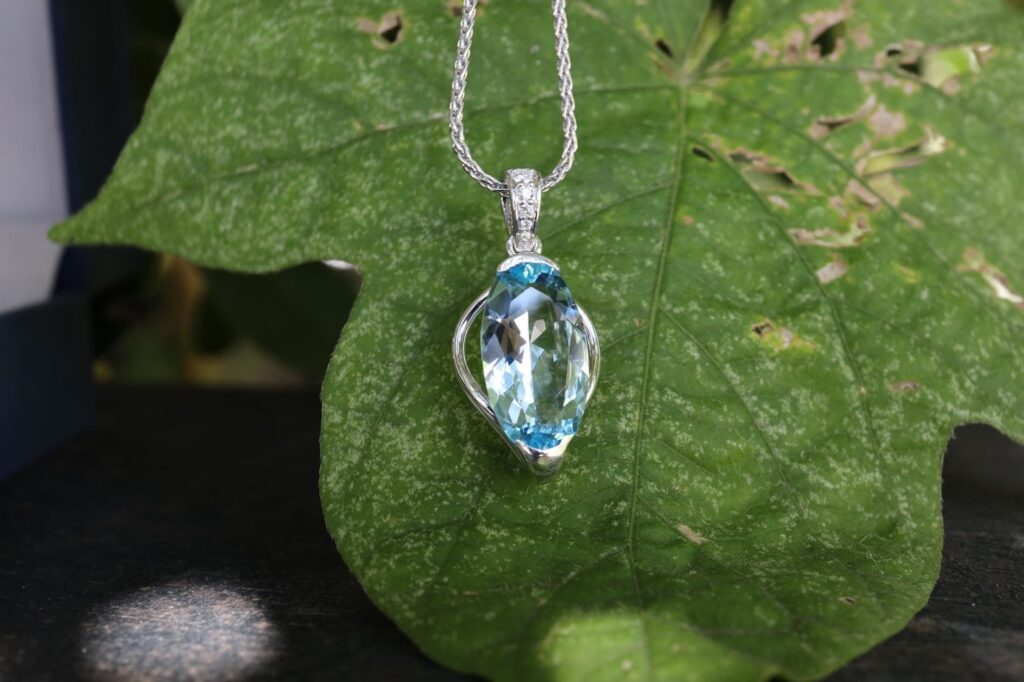
This is really one question about wearing two masks: “What’s it worth?” and “What do I want to carry forward?” If the design is historically significant, beautifully made, or widely recognized in your family, keeping it intact can protect both meaning and value. But if the piece is fragile, unworn, or simply not you, redesigning may be the most honest way to keep it present.
Before anything permanent, explore your options. Sometimes a careful restoration of what we call Signature Care through Client Services brings a piece back to strength without erasing its character. Other times, a redesign can keep the original stones or metal while giving you a silhouette you’ll actually wear.
Melting purely for scrap can be quick, but it can also silence a story you can’t repurchase. Keeping it untouched forever can do the same. The best choice keeps the meaning active in your life.
How Can I Preserve the Story of Inherited Jewelry for Future Generations?
You don’t need a museum. You just need a little intention.
- Write down names, dates, places, and what you know about how it was worn.
- Record a quick voice note with an older relative while details are still clear.
- Photograph the piece in good light, including close-ups of engravings and markings.
- Keep original boxes, notes, receipts, or appraisals with the jewelry, even the “small” papers.
- Add a short handoff letter: why you’re passing it, what it meant, and what you hope it carries.
Those simple steps turn “mystery jewelry” into documented family history. And if you ever redesign the piece, your notes become the compass so the new form still honors the old meaning. The goal isn’t perfection. It’s continuity: giving the next person a story they can hold, not just a piece they can price.
How Do Jewelers Evaluate Inherited Jewelry beyond Scrap Value?
A meaningful evaluation looks at more than the scale it looks at structure, stones, and story.
Craftsmanship and Construction:
We check how the piece is built: prong wear, setting integrity, solder points, symmetry, and whether past repairs were done well. Wearability and safety matter, especially if you plan to wear it often.
Stones and Materials:
We assess metal purity and gemstone traits like cut, color, clarity, and condition, plus any signs of damage or treatment. A smaller stone can be exceptional; a larger stone can be compromised.
Era, Maker, and Provenance:
Design cues can point to a period, and maker’s marks can add collectability. Your family story matters, too, because it guides whether we prioritize restoration, redesign, or preservation.
Scrap value is a floor, not a full answer. The right jeweler helps you see the whole picture.
Can I Redesign Inherited Jewelry Without Losing Its Meaning?
Yes, redesign is often how meaning becomes wearable again. The secret is deciding what must remain “true,” even if the shape changes. For some people, it’s keeping the original center stone. For others, it’s preserving an engraving, reusing the metal, or echoing a signature detail like milgrain or a certain curve.
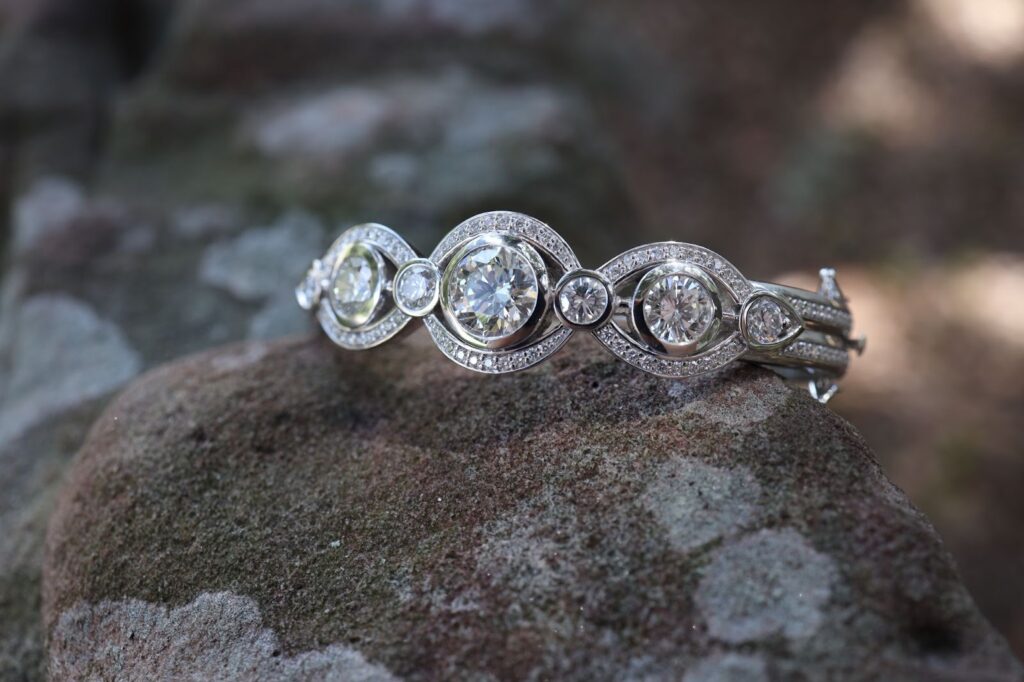
A thoughtful redesign starts with listening. What did this piece represent in your family steadiness, devotion, celebration, survival? Then we translate that into design choices that fit your life now. A diamond ring might become a pendant you wear every day. A cluster might become a cleaner setting that highlights the best stone. Several small stones might become a band that stacks with your wedding ring.
Redesign isn’t erased. It’s renewal. It’s taking an inherited promise and giving it a form that keeps showing up close to the pulse where it belongs.
What Is the Best Way to Care for Inherited Jewelry so It Lasts?
Think of care as stewardship, not stress. First, wear with awareness: remove jewelry for workouts, heavy lifting, gardening, swimming, and harsh cleaners; those are the fastest routes to loosened stones and worn prongs. Second, clean gently: warm water, mild soap, and a soft brush handle most buildup. Skip harsh chemicals, and don’t assume ultrasonic cleaners are safe for older settings.
Third, store thoughtfully. Keep pieces separated so stones don’t scratch each other, and use a soft pouch or lined box. Fourth, schedule checkups. Prongs and clasps wear down quietly; a quick inspection can prevent a loss that can’t be undone.
If the piece is sentimental, consider preventative strengthening through Client Services tightening, reinforcement, or re-tipping before anything fails. Most of all, don’t let fear keep it hidden. Heirlooms last longest when they’re cared for and loved out loud.
Inherited jewelry isn’t just metal on a scale. It’s devotion you can hold, history you can wear, and a promise you can pass forward with intention. If you’re holding a family piece and wondering what to do next, restore it, redesign it, or simply understand it, we’re here to help you sort it with calm clarity.
Come by our studio for a private jewelry conversation, or book an online design appointment so we can walk through your piece together, step by step. Either way, we’ll help you protect what matters, honor the story, and carry it forward in a form that feels unmistakably yours.